

Taking action: introducing the youth homeowner awards 2025
in 2025 a group of young people cooked up a campaign over several weeks at the museum - the youth homeowner awards
Housing and homelessness in the UK are in crisis. Rising rents, a severe lack of affordable homes, and thousands of people facing or experiencing homelessness every day paint a bleak picture. While property developers and landlords grow richer, far too many are left struggling with housing insecurity.
These Young Londoners took at the housing industry with the launch of the Youth Home Owner Awards 2025 - a satirical prize-giving ceremony “celebrating” the landlords, developers and tycoons who’ve gone above and beyond to make the city unliveable.
Created by a youth homelessness campaigning collective in partnership with the Museum of Homelessness, the awards highlight the biggest culprits behind London’s housing crisis, from luxury developers flogging £175 million penthouses with zero affordable units, to landlords ignoring disabled tenants and leaving families to live in dangerously mouldy flats.
Awards were presented in July 2025 person to seven recipients. They shine a light on the everyday violence of gentrification, ghost landlordism, no-fault evictions and asset-stripping masquerading as regeneration. Check out the award winners below:

it doesn’t have to be this way - HOW IT WORKED

A youth-led campaigning collective supported by Coram came together to challenge those in power and fight against homelessness, inequity, and poverty.
This was a group led by people with lived experience—those who know the realities of housing injustice firsthand. Over several weeks the group came together and planned the awards.
“Real change will only come when we start calling out the companies cashing in on multi million-pound developments and tax breaks - while bulldozing communities, dodging social housing quotas, and funding far-right grifters.” - Collective Member
AND THE AWARDS WINNERS WERE.
Full list of awards categories and the winners:
Social Cleansing Award - Lendlease
For displacing communities through estate regeneration in Southwark and Haringey
Community Clearance Award - Ballymore
For bulldozing our grassroots groups from North Kensington’s last community Hub
Greenwash Buzzword Award - Berkeley
For using greenwashing to distract from community displacement and housing inequality
Ghost Landlord Award - Clarion
For consistently vanishing when your tenants need you most
Eviction Excellence - Notting Hill Genesis
For prioritising private development over tenants and communities
Lifetime Achievement Award - Nick Candy
For harvesting public money into private luxury, offshore accounts and elite-only enclaves
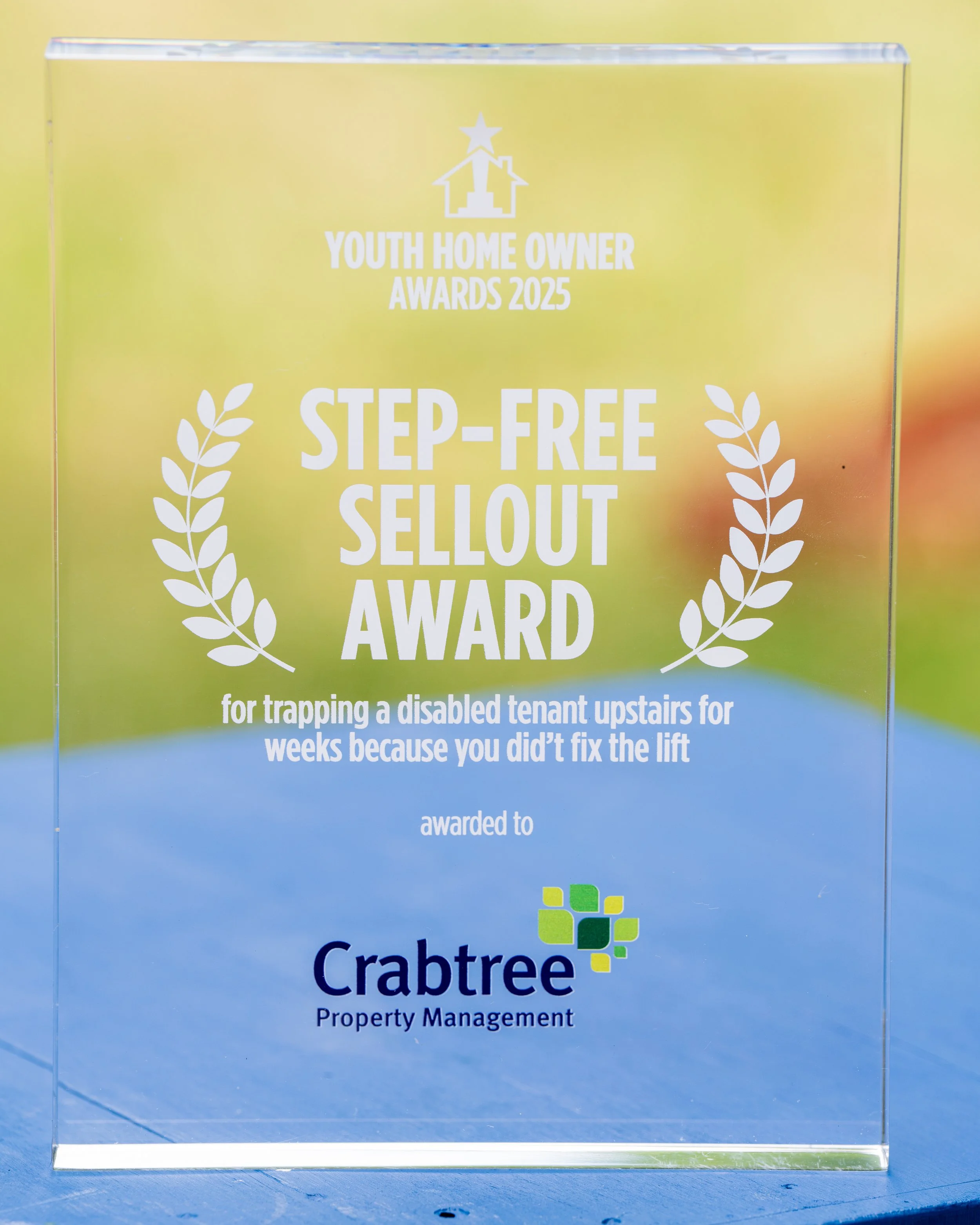
Step-Free Sellout Award - Crabtree
For trapping a disabled tenant upstairs for weeks because you didn’t fix the lift
INSPIRED BY ACTION: EXAMPLES OF COMMUNITIES FIGHTING BACK
If you’re curious about what inspired our campaigning collective to take action here are some examples of other collectives that provided inspiration:
These examples showcase how communities have harnessed the power of collective action to fight housing injustice and poverty:
Focus E15 Campaign (London, UK)
When a group of young mothers in Newham were threatened with eviction from their hostel, they fought back. The Focus E15 campaign began in 2013, demanding safe and secure housing for all. They occupied empty council homes on the Carpenters Estate to highlight the scandal of homes left empty while homelessness soared, putting the housing crisis in the national spotlight.
ACORN (UK-wide)
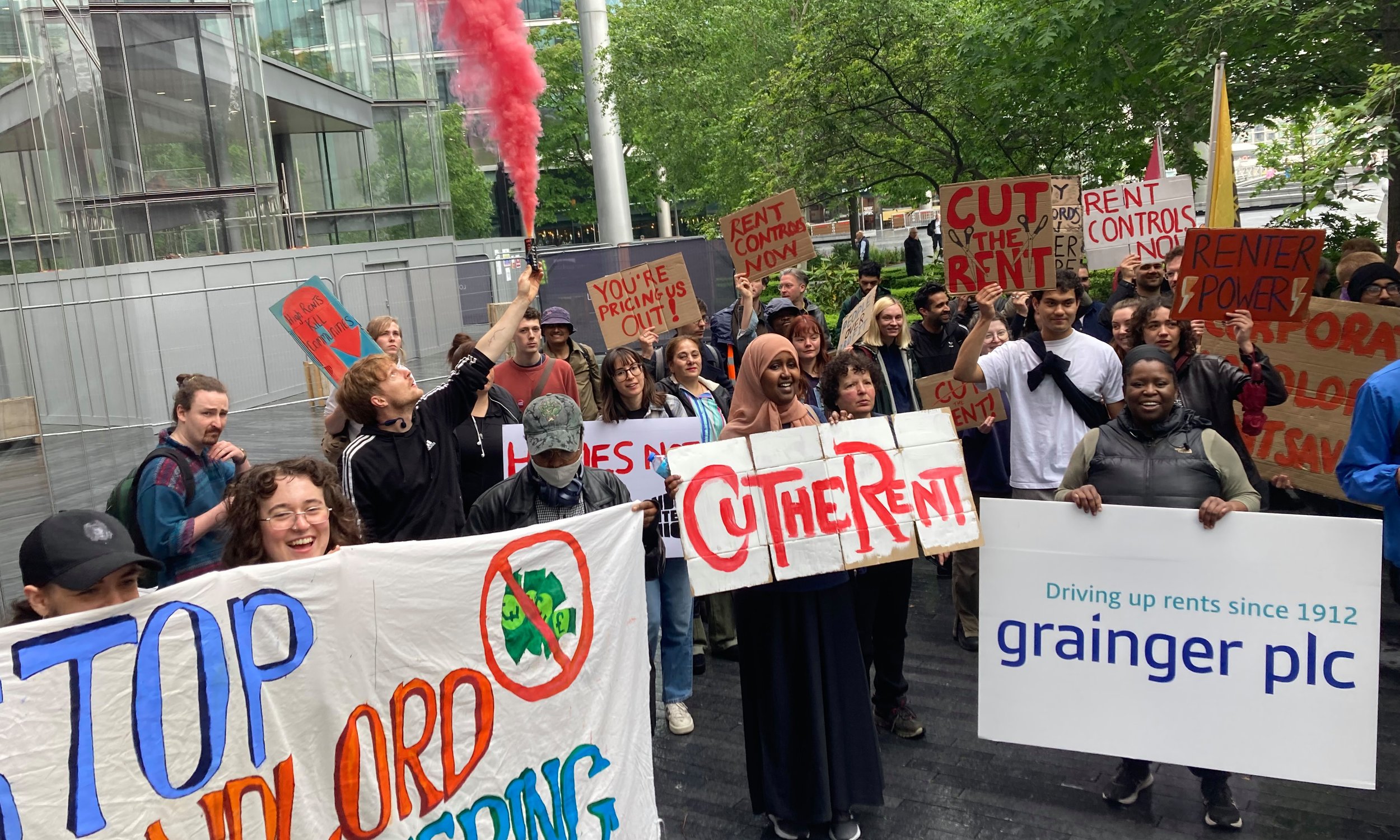
ACORN, a community union led by working-class people, has organised against unfair evictions, rent hikes, and unsafe housing conditions. Through direct action, including landlord blockades and public demonstrations, they’ve won countless victories for tenants across the UK.
Dublin Housing Action Committee (Ireland)
Though historical, the Dublin Housing Action Committee of the 1960s set a powerful precedent. The group led occupations of empty properties to demand housing for those in need, directly challenging the government’s inaction.
Glasgow Girls (Glasgow, UK)
Though focused on asylum seeker rights, the Glasgow Girls’ campaign against dawn raids in the early 2000s highlights the power of youth-led movements. Their actions—raising awareness, organising protests, and lobbying policy makers—ultimately led to changes in how asylum seekers were treated in the UK.

here are some other examples of inspiring and creative tactics used by collectives across the UK and beyond that we tapped into:
Direct Action - Direct action is about disrupting harmful systems to demand change. For example, activists from the Focus E15 campaign occupied empty council homes on London’s Carpenters Estate, exposing the scandal of empty properties in the middle of a housing crisis.
Occupations and Sit-ins - Occupying spaces sends a strong message about reclaiming power. In Glasgow, the tenants' movement Living Rent has occupied council offices to demand fairer treatment of renters and challenge rogue landlords.
Ad Hacking - Ad hacking transforms public advertising spaces into platforms for truth-telling. Groups like Special Patrol Group (UK) have altered billboards to highlight issues like housing inequality and the exploitation of tenants, reframing commercial spaces to serve public awareness.
Sneaking Into Exclusive Spaces - Activists have snuck into high-profile events to disrupt and expose injustices. For example, campaigners have entered luxury property fairs to protest the development of unaffordable housing, drawing attention to how these spaces exclude ordinary people.
Creative Demonstrations - Art and performance have been powerful tools for protest. Groups like Picture the Homeless in New York City have staged theatrical demonstrations, such as “homeless sleep-ins” outside vacant properties to challenge misconceptions about homelessness.
Tenant and Community Blockades - To stop evictions or unfair practices, community members have physically blocked bailiffs or landlords from accessing homes. ACORN’s local branches in cities across the UK have successfully protected tenants through this method, often winning agreements to keep people in their homes.
Public Protests and Marches - Classic forms of protest, like marches and rallies, continue to be effective. From the mass protests against the Housing and Planning Act in London to local demonstrations against unfair evictions, these actions bring public attention to pressing issues.
These examples show that whether through disruption, creativity, or direct confrontation, collective action can take many forms—each with the power to challenge injustice and create change.
This programme is funded by Coram with funds from Oak Foundation. The museum would like to thank the collective for all their work in 2025 to make the Youth Homeowner Awards possible.